Introduction
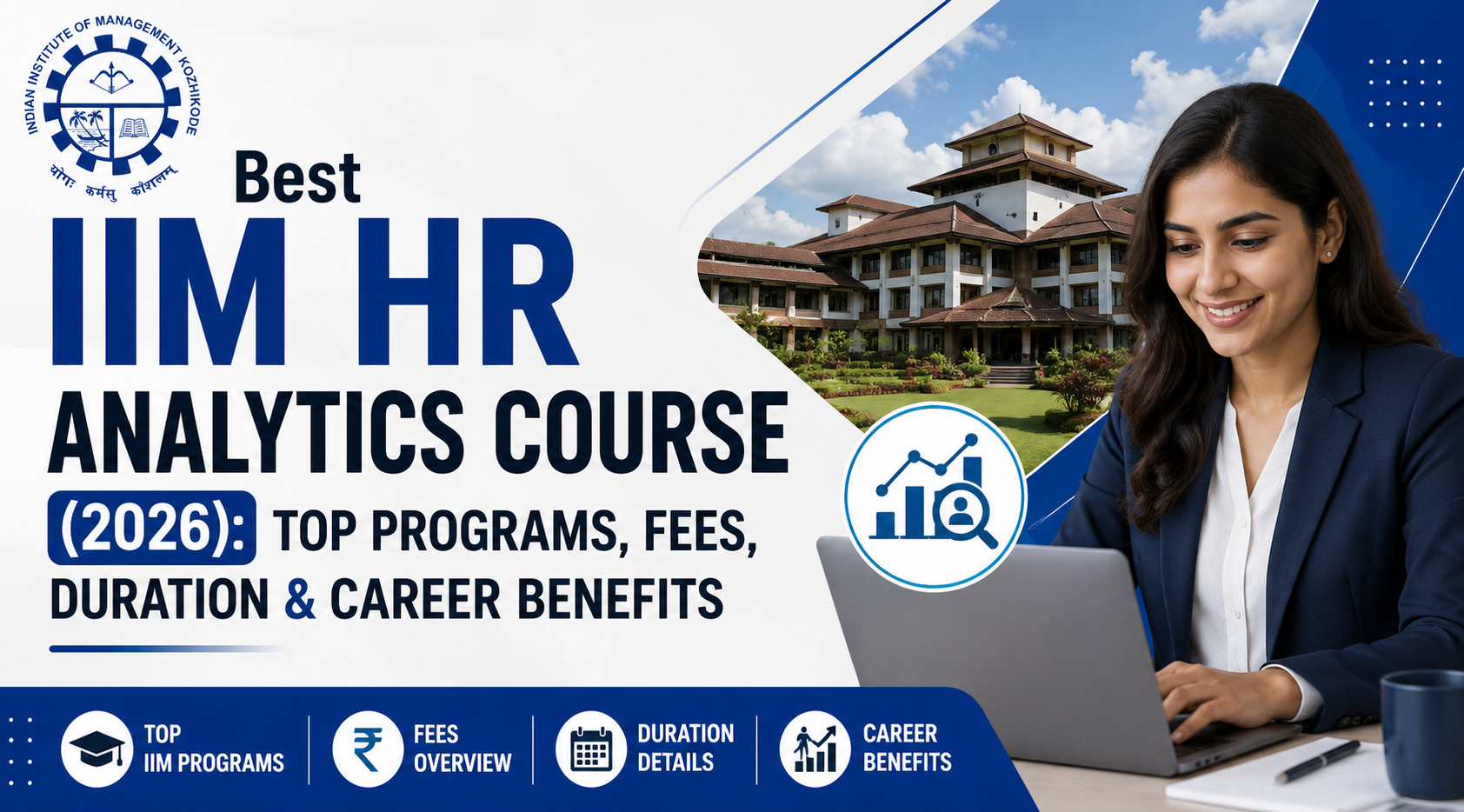
IIM HR Analytics has evolved far beyond recruitment and employee management. In 2026, HR professionals are expected to make strategic decisions using workforce data, improve employee performance, predict hiring needs, and contribute directly to business growth. As organizations increasingly rely on data-driven decision-making, HR Analytics has become one of the most valuable skills for modern HR professionals.
To stay competitive, many HR executives are choosing specialized HR Analytics programs offered by IIMs. These programs help professionals combine traditional HR knowledge with analytical skills, enabling them to make better business decisions and prepare for leadership roles.
If you are planning to advance your HR career, an IIM HR Analytics program can help you build the knowledge and confidence required for today’s evolving workplace.
What is HR Analytics?
HR Analytics is the process of collecting, analyzing, and interpreting employee-related data to improve business decisions.
Instead of relying only on experience or assumptions, HR professionals use data to understand employee performance, hiring effectiveness, retention trends, workforce productivity, training outcomes, and organizational growth.
This approach allows companies to make smarter HR decisions while improving overall business performance.
Why HR Analytics is Important in 2026
Modern organizations generate a large amount of employee data every day. Companies want HR professionals who can convert this data into meaningful business insights.
HR Analytics helps organizations reduce employee turnover, improve hiring quality, increase employee engagement, optimize workforce planning, and support leadership decisions.
As businesses become more technology-driven, HR professionals with analytical skills are becoming highly valuable across industries.
Why HR Professionals Choose IIM HR Analytics
One of the biggest reasons professionals choose an IIM HR Analytics program is the opportunity to develop industry-relevant skills.
The program combines HR concepts with business analytics, helping professionals understand how data supports workforce planning and organizational success.
It also strengthens strategic thinking, allowing HR professionals to participate in business planning rather than only handling operational HR responsibilities.
For experienced professionals, this knowledge can support career advancement into senior HR leadership roles.
Program Overview
| Particulars | Details |
| Program Type | Executive HR Analytics Program |
| Suitable For | HR Professionals, Managers, Recruiters, Team Leaders, and Business Professionals |
| Learning Mode | Flexible Learning |
| Focus Area | HR Analytics, Workforce Planning, Data Analysis, and Leadership |
| Career Goal | Senior HR and Leadership Roles |
Skills You Can Develop
The program helps HR professionals build a combination of technical and managerial skills.
Students improve their understanding of workforce analytics, employee performance analysis, talent acquisition strategies, data interpretation, strategic workforce planning, and business decision-making.
The program also develops communication skills, leadership abilities, critical thinking, problem-solving, and analytical capabilities.
These skills help professionals become strategic contributors within their organizations.
Who Should Pursue an IIM HR Analytics Program?
The program is suitable for professionals working in different HR functions.
HR Executives can strengthen their analytical capabilities and prepare for management roles.
HR Managers can develop strategic workforce planning skills and improve decision-making.
Talent Acquisition Specialists can use analytics to improve hiring quality and recruitment efficiency.
Learning and Development professionals can analyze training effectiveness and employee growth.
HR Business Partners, Employee Relations Managers, Compensation Professionals, and HR Consultants can also benefit from the program.
Career Opportunities After HR Analytics
Completing an HR Analytics program can create opportunities across multiple industries.
Professionals may pursue roles such as HR Analytics Manager, Talent Analytics Specialist, Workforce Planning Manager, HR Business Partner, Employee Experience Manager, HR Strategy Consultant, People Analytics Consultant, and Senior HR Manager.
As professionals gain experience, they can also progress into leadership positions such as HR Director and Chief Human Resources Officer.
Benefits of Learning HR Analytics
One of the biggest advantages of learning HR Analytics is improved decision-making.
Instead of relying on assumptions, professionals can use employee data to solve workplace challenges and improve business performance.
HR Analytics also helps organizations build better recruitment strategies, improve employee retention, enhance workforce productivity, and identify future talent requirements.
For professionals, these capabilities improve career opportunities and increase their value within an organization.
Future Scope of HR Analytics
The future of Human Resources is becoming increasingly data-driven.
Organizations are investing in digital HR systems, workforce analytics platforms, Artificial Intelligence, and predictive analytics to improve people management.
Professionals who understand both Human Resources and data analysis will continue to be in high demand across industries including technology, healthcare, banking, manufacturing, retail, education, consulting, and financial services.
As organizations continue focusing on business performance through workforce optimization, HR Analytics will remain one of the most valuable skills for HR leaders.
Conclusion
HR Analytics has become an essential skill for professionals who want to build successful HR careers in 2026. Organizations are looking for HR leaders who can combine people management with data-driven decision-making to improve business performance.
An IIM HR Analytics program helps professionals strengthen analytical thinking, workforce planning, leadership, and strategic HR management skills. It prepares HR professionals to move beyond traditional HR functions and contribute directly to organizational growth.
For individuals seeking promotions, leadership opportunities, and long-term career development, learning HR Analytics can be a valuable investment in their professional future.
FAQs
1. Who should pursue an IIM HR Analytics program?
HR executives, HR managers, recruiters, HR business partners, consultants, and professionals seeking leadership roles can pursue the program.
2. What is the main objective of HR Analytics?
HR Analytics helps organizations make data-driven decisions related to hiring, employee performance, workforce planning, and retention.
3. Is HR Analytics useful for experienced HR professionals?
Yes. It strengthens strategic decision-making and prepares professionals for senior HR and leadership positions.
4. What career opportunities are available after learning HR Analytics?
Professionals can work as HR Analytics Managers, People Analytics Specialists, HR Business Partners, Workforce Planning Managers, and HR Consultants.
5. Why is HR Analytics important in 2026?
Organizations increasingly rely on workforce data to improve business performance, making HR Analytics an essential skill for modern HR professionals.